











 Isource Marketing
No hay newsletters disponibles.
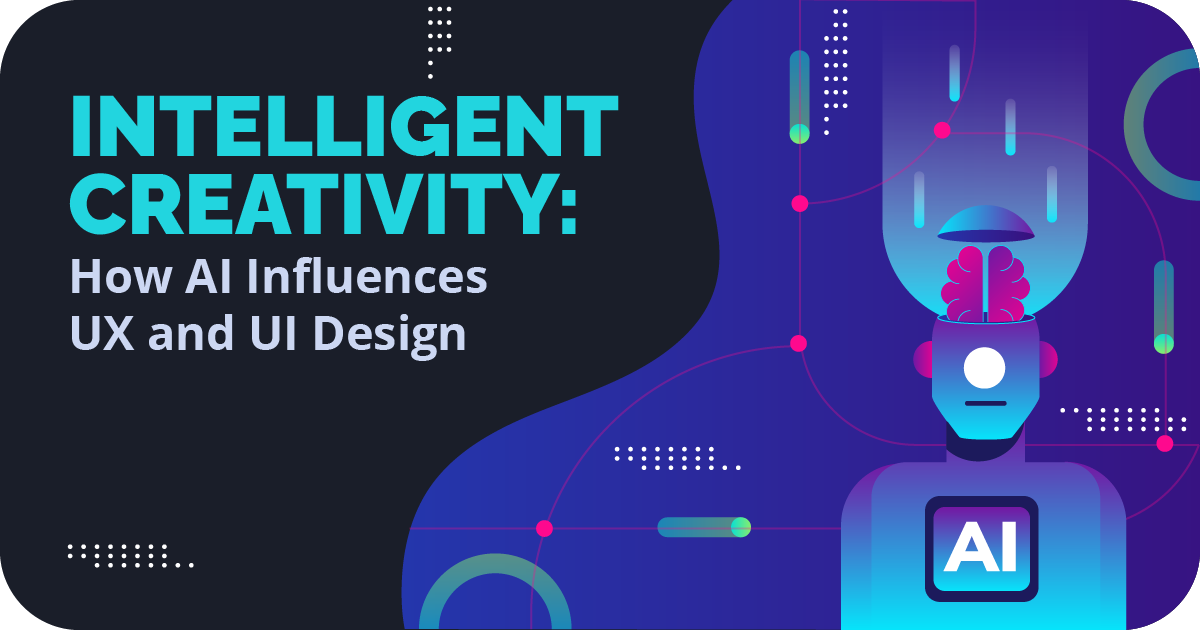
In recent years, Artificial Intelligence (AI) has revolutionized numerous processes, optimizing tasks and improving tools across various industries. Design is no exception. Both User Experience (UX) and User Interface (UI) have been transformed by the advanced capabilities AI offers. In this blog, we will explore how AI is influencing UX and UI design and how we can leverage its benefits to create successful user experiences.
UX and UI design are two crucial fields in digital design that work together to create successful and enjoyable products for users. While UX design focuses on the overall user experience, aiming to improve accessibility, satisfaction, and usability, UI design emphasizes the appearance and presentation of the product, ensuring it is visually appealing and coherent.
The importance of working on both lies in how they connect users with the product. Good UX design ensures that users can interact efficiently, facilitating navigation. Meanwhile, good UI design enhances the product’s aesthetics and user interaction, making the experience more enjoyable.
In the business world, a constant priority is to ensure customer satisfaction. In design, this responsibility is equally fundamental, especially in e-commerce and digital platforms that are frequently used. This turns the audience into vast amounts of data and expectations that designers must meet.
This is where Artificial Intelligence profoundly transforms both fields of digital design. By analyzing large volumes of data and learning from user behavior patterns, AI offers powerful tools that enable designers to create more personalized, efficient, and attractive experiences and interfaces. Next, we will explore the main benefits of AI in UX and UI design.
Personalization: Unique Experiences and Interfaces for Each User
AI can analyze large amounts of data to uniquely tailor the experience and interface. Algorithms enable applications and websites to automatically adapt to individual user preferences.
Platforms like Spotify adjust the user interface to highlight daily recommendations and personalized playlists based on the user’s listening history.
Design Automation: Efficiency and Creativity in UX and UI
AI-powered design tools allow designers to create more engaging and user-friendly content. Automation helps generate user flows and information architectures based on best practices and data, saving designers significant time.
Tools like Adobe XD with AI offer recommendations in wireframes and prototypes, while Figma uses AI to suggest design components and alignments, facilitating faster and more precise iterations.
Predictive Analysis: Anticipating Needs and Improving Decision-Making
AI’s ability to predict user behavior is invaluable for designers. AI can efficiently process large amounts of user data, providing valuable insights into user behavior and preferences.
For example, e-commerce platforms like Amazon can predict which products a user is more likely to buy, adjusting navigation and offers accordingly.
Continuous Evaluation: Instant Feedback
Usability testing and visual effectiveness evaluation enhance the success of a design. AI can track performance and adjust the design, ensuring that user experiences are always optimized.
An AI-powered visual study, such as the virtual eye-tracking provided by Tobii Pro, analyzes how users interact with the interface. This helps identify problem areas and optimize visual design.
Conversational Interaction: Virtual Assistants and Chatbots
Chatbots and virtual assistants are a clear example of how AI improves user interaction, facilitates communication, and provides real-time information.
Siri and Alexa are examples of AI that, by providing quick and relevant responses, enhance the user experience and interaction with their environment.
Accessibility: Inclusive Design
AI tools can suggest improvements to make websites and applications more accessible, helping to create more inclusive products.
For example, Microsoft’s AI for Accessibility generates alternative descriptions for images and adjusts color contrast for users with visual impairments, enhancing interaction for all disabilities.
User Profiles: Emotion Analysis
AI can help create detailed user profiles to personalize the experience, analyzing emotions and needs to create interfaces that better resonate with users.
Adobe Sensei uses AI to analyze and optimize visual design, recommending the use of certain colors or font styles that evoke the desired emotions to deeply connect with users, increasing both satisfaction and engagement.
Now that you know the benefits AI offers, it’s time to integrate it into your CRM. Follow these simple steps to effectively adapt your company:
Uizard: Converts sketches and wireframes into interactive prototypes using AI. This tool is ideal for quickly creating prototypes and gathering user feedback.
Galileo AI: Automates design elements and visual content. Quickly creates prototypes, interfaces, and graphics, and can generate HTML and CSS code to implement the prototypes, facilitating the development process.
Synthetic Users: Builds synthetic users that simulate real user behavior in various situations. This makes it easier to test products and platforms in different scenarios.
Fronty: Automatically transforms design images into HTML and CSS code, enabling agile website creation and editing without coding. Quickly converts visual mockups into functional websites.
Adobe Firefly: Edits and creates images and graphics with greater detail than other AIs. Its advanced algorithms suggest elements that align with the project’s needs.
AI positively influences UX and UI design, from personalization and automation to predictive analysis and design optimization. It offers powerful tools that facilitate the creation of more intuitive, attractive, and user-centered experiences and interfaces. Additionally, it helps designers focus more on creativity and less on repetitive tasks.
At Isource Marketing, we firmly believe that businesses should take the latest trends to make their marketing actions more effective and boost their processes. Please, feel free to contact us for advice or quotes on marketing solutions, and take the bold step to enhance your B2B/B2C strategies with us.
No hay newsletters disponibles.
Artificial intelligence is no longer a future promise: it’s a real tool that’s transforming how marketing teams operate. But beyond chatbots and simple automations, a new player has taken center stage: AI agents.
In this article, you’ll discover what an AI agent is, how it differs from the tools you already know, and why it’s become a key asset for scaling your B2B strategy without losing control or personalization.
In recent years, artificial intelligence has gone from being a novelty to becoming a part of the daily routine in marketing: automating processes, reducing repetitive tasks, and improving efficiency. However, there’s a new tool ready to take the next step: AI agents.
These intelligent systems don’t just execute commands or answer questions. They learn, make decisions, connect to your platforms, and work autonomously to scale marketing, sales, and customer service processes—all while maintaining a human touch.
And the best part: you don’t need to be a multinational corporation to access this technology. There are now tools that have democratized the creation of AI agents. Today, any B2B team can have one up and running if they know how and why to implement it.
An AI agent is an intelligent system that not only understands natural language but also reasons, makes decisions, and performs actions on behalf of your team. Unlike a chatbot or traditional automation, an AI agent can operate autonomously, with access to tools, memory, and well-defined business rules.
That’s why, more than just automation, it’s an active team member, working 24/7 without errors, breaks, and with the ability to adapt to results.
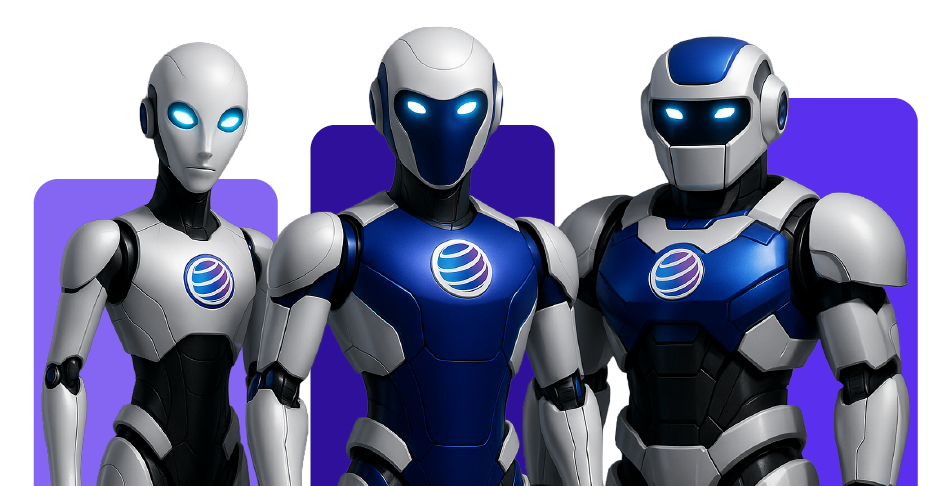
Identifying which type of AI agent you need for your business is crucial to ensure that it’s truly aligned with your marketing, sales, or customer service goals. Below are some tips to help you decide which one is the right fit based on your team’s specific needs.
1. Determine which area of your business would benefit the most from automation.
Does your business need an agent that simply executes repetitive, fixed tasks or one that can learn, adapt, and offer personalized responses based on customer interactions? If it’s the latter, you’ll need an AI agent with machine learning capabilities.
Make sure that the AI agent you choose can integrate with the tools you’re already using, such as your CRM, campaign platform, database, or customer service system. Additionally, it’s essential that your agent is powered by a robust AI model, such as ChatGPT or Gemini, allowing it to provide accurate responses and make informed decisions. Solutions like HubSpot, and N8N are excellent for this integration ensuring smooth connections between all your platforms.
If you prefer an agent that simply executes specific tasks under direct commands, an AI assistant might be enough. However, if you’re looking for a fully autonomous agent that can make decisions and handle complex processes continuously, then you need an advanced AI agent.
Interested in learning how HubSpot can help you create AI agents native to your CRM? Read our previous blog and discover everything you can do with HubSpot + AI
Using an AI agent is not just about having an intelligent tool but knowing how to harness its true potential to optimize your processes and achieve more ambitious business goals. Below are the key benefits of adopting an AI agent and recommendations to ensure its successful implementation.
Automate repetitive tasks, freeing up your team to focus on higher-impact activities, while operating 24/7 without errors.
When integrated with your CRM, AI agents can personalize the customer experience based on their history, without overloading your team.
AI agents learn from each interaction and continually improve in marketing, sales, and customer service.
Reduces manual intervention, optimizing time and operational resources.
As your business grows, the agent can handle more volume without the need to hire additional staff.
¿Quieres aprender a implementar un agente de IA en tu negocio y sacar el máximo provecho de HubSpot?
Agenda aquí una consultoría gratuita con nosotros y empieza a optimizar tus procesos con IA.
If you’re ready to take the next step toward intelligent automation and personalization, a custom-built AI agent can transform your business. At ISM, we can help you create an AI agent that works 24/7, optimizing your marketing, sales, and customer service processes.
No hay newsletters disponibles.
Is your marketing strategy still relying on assumptions, manual processes, and scattered data?
When opportunities are measured in clicks and seconds, lacking tools that provide full control, efficiency, and visibility doesn’t just slow you down—it costs you sales.
HubSpot has evolved. Today, it combines intelligent automation, a robust CRM, and artificial intelligence to help you attract high-quality leads, streamline your team’s workflows, and accelerate every stage of your sales funnel.
As an official HubSpot partner, we at Isource understand the value of leveraging this platform’s full potential to optimize marketing, sales, and customer service operations.
In this article, we’ll explore how HubSpot’s advanced, AI-powered features can transform how your business scales, converts, and grows—with precision.
When a tech company is ready to grow, it needs more than isolated tools or fragmented systems. It needs a unified solution that connects lead generation, sales, and long-term customer engagement. That’s exactly what HubSpot offers—a comprehensive platform designed to drive growth in a structured, measurable, and scalable way.
HubSpot integrates marketing, sales, customer service, and CRM into a single solution. This not only streamlines team collaboration but also provides complete visibility across the customer lifecycle—from the first click to post-sale engagement—all in one place.
Now, with artificial intelligence (AI) powering its features, the platform has become even smarter—helping you move faster, close more deals, and optimize every customer touchpoint.
Manually managing leads is no longer sustainable for businesses ready to scale.
Real growth happens when your CRM stores data, prioritizes opportunities, automates tasks, and empowers your team to act at the right moment.
HubSpot CRM provides a clear view of every contact, automates repetitive tasks, and centralizes all relevant customer information. With Breeze, HubSpot’s native AI, the CRM becomes truly proactive.
Breeze analyzes real-time data, identifies conversion patterns, and delivers intelligent recommendations, so your sales team can focus where it matters most.
Key features enhanced by Breeze:
Every sales decision is backed by real data and predictive insights—no more chasing cold leads or relying on guesswork.

Winning at inbound marketing today requires both relevance and execution efficiency. With HubSpot, you can design and automate your entire content strategy blogs, emails, landing pages, forms, CTAs, and more.
Everything is built to attract qualified leads, convert them, and nurture them with the right content at the right moment.
What sets HubSpot apart is how it executes this through automation—especially with Breeze Copilot, its AI-powered assistant that enables:
The result is an inbound strategy that not only scales but improves with every interaction. Your leads receive meaningful, timely content while your team focuses on what truly matters—turning ideas into measurable results.
Still unsure how to improve your content strategy and achieve effective inbound marketing? Check out our Comprehensive Guide: Advanced Inbound Marketing Strategies for the Technology Sector

The gap between businesses that scale and those that stall comes down to execution. Having strategies is not enough—you must implement them quickly, with precision, and at scale.
HubSpot recognizes this challenge and goes far beyond CRM and inbound marketing.
With HubSpot, you can:
to nurture leads, assign tasks to your sales team, and trigger alerts based on user behavior.
to answer inquiries, qualify leads, and automatically schedule meetings.
tailored to each prospect’s past interactions.
All of this becomes even more powerful with Breeze Agents, HubSpot’s intelligent assistants that help:
Think of HubSpot’s AI as an extension of your team—managing repetitive tasks, analyzing real-time data, and providing recommendations to boost efficiency and drive results faster.

Today, scaling success depends on how smart, integrated, and agile your processes are. HubSpot is more than a CRM or a marketing tool—it’s the upgrade your strategy needs to grow in a structured, measurable, and sustainable way.
Whether you’re a fast-growing startup or an established tech business, HubSpot is the solution that supports your growth objectives.
Achieving real impact with HubSpot requires more than just access—it takes strategy, structure, and expert guidance.
At Isource, as official HubSpot partners, we transform the platform into a true growth engine for your business.
From CRM setup to full marketing and sales automation, we’ll support you every step of the way—helping you unlock HubSpot’s full potential and drive meaningful results.