Isource Marketing

Is BANT Still Relevant in 2024? Alternative Frameworks

Is BANT Still Relevant in 2024? Alternative Frameworks

Share

No hay newsletters disponibles.

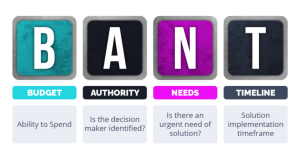
In today’s fast-paced world of business-to-business (B2B) technology sales, the methods we use to find and support potential customers are always changing. BANT, a tried-and-true approach, has long been a key tool. Created by IBM, BANT helps sales teams figure out if a potential customer has the Budget, Authority to make a purchase, a Need for the product, and a suitable Timing. This approach has been essential for sales teams to determine if a prospect is likely to become a customer.

However, it’s crucial to question whether BANT can still meet the demands of the current market. With new tech and changes in the way people buy, looking into new strategies is key to keeping up.
Blog-March-2024_Blog-2-EN-768x408

BANT and the Evolution of Lead Qualification

Checking if someone is likely to make a purchase (lead qualification) is crucial in sales, ensuring our efforts and resources are focused on potential customers who are actually interested. BANT has long served as an easy-to-follow guide for this purpose. However, BANT was created in a time when sellers had more influence over sales. Nowadays, with the internet, buyers do a lot of research and consider various options well before they speak to a salesperson.

This shift means it’s time to rethink old methods like BANT. Sales teams now must navigate a world where buyers are much more informed and have higher expectations. Buyers are looking for products that not only meet their immediate needs but also support their long-term goals.

Alternatives to BANT

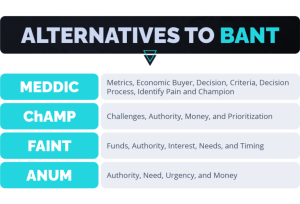
Given that BANT doesn’t fully meet the needs of the modern B2B tech market, new strategies have come up. These new methods are designed to better understand and match today’s buying habits and what the market wants.
Blog-March-2024_Blog-3-EN-768x523

CHAMP

CHAMP stands for understanding the customer’s main CHALLENGES, who has the AUTHORITY to make decisions, how much MONEY they have, and what needs to be done first (PRIORITIZATION). This method focuses more on what the buyer needs than on selling. It helps sales teams make their pitches more relevant by showing how they can solve the buyer’s specific problems.

MEDDIC

MEDDIC is about getting to know the buyer’s business better. It stands for looking at METRICS (or measures of success), finding out who the ECONOMIC BUYER is (the person with the money), understanding the DECISION CRITERIA AND PROCESS, IDENTIFYING the main Pain points, and finding a CHAMPION (someone inside the company who supports your solution). This approach makes sure that sales efforts match up with how the buyer makes decisions and works internally. 

ANUM

ANUM redefines the traditional components of BANT by emphasizing AUTHORITY, NEED, URGENCY, and MONEY, highlighting the importance of the decision-maker’s power and the immediate need for a solution. By focusing on the urgency, ANUM equips sales teams to quickly identify and seize opportunities where prospects are ready to make fast decisions.

FAINT

FAINT, which stands for FUNDS, AUTHORITY, INTEREST, NEED, and TIMING, understands that not every potential customer will have a set budget for your product but could find the means if they see its value. This approach is especially useful in the startup world and innovative industries, where budgets are more adaptable.

Choosing the Right Framework Beyond BANT

Selecting the appropriate framework depends on various factors, including your industry, sales cycle length, and the nature of your product or service. While BANT offers a solid foundation, its alternatives can provide a more flexible and modern approach to understanding and engaging with today’s smart buyers.

When you use these methods in your sales plan, it’s important to find the right balance. You need to make sure the leads are really likely to buy, but also be flexible for each potential customer’s special situation. In addition, you should adapt your CRM (Customer Relationship Management) system to successfully implement the chosen framework and reach your goals.

If you want to learn more about sales and marketing, we recommend you to read: Lead generation: The key to success in sales

In Summary

Although BANT’s straightforward approach and emphasis on critical factors are still appreciated, newer frameworks are proving to be more flexible and thorough, better matching the needs of current buyers.

Adopting these new approaches allows sales teams to improve how they decide which leads to focus on, foster stronger connections with potential clients, and achieve greater success. The quest for improved sales techniques in today’s digital era is continuous, emphasizing the importance of staying updated and adaptable.

At Isource Marketing, we firmly believe that businesses should take the latest trends to make their marketing actions more effective and boost their processes. Please, feel free to contact us for advice or quotes on marketing solutions, and take the bold step to enhance your B2B/B2C strategies with us.

Step into Evolution: Enhance Your CRM with AI

Step into Evolution: Enhance Your CRM with AI

Share

No hay newsletters disponibles.

In the world of digital marketing, success increasingly depends on deeply understanding customer needs and behaviors. This is where CRM (Customer Relationship Management) is essential for building and maintaining strong relationships. However, we often take its functionality for granted and overlook the opportunities to optimize data usage more intelligently by integrating smart technologies. In this blog, we’ll show you how your CRM can evolve and improve its results with Artificial Intelligence

Customer Relationship Management (CRM) is the main source of data and strategies that achieve more organic marketing to drive the growth of every business. This, in turn, allows companies to offer a personalized experience, improve customer retention and loyalty by analyzing interactions and user data throughout their lifecycle.

Even so, with the massive amount of data generated daily, managing a CRM can be an overwhelming task. Traditional strategies, technologies, and practices can become overloaded, leading to less relevant results or a lack of prioritization of customer needs.

Advanced Analytics: AI can capture large volumes of CRM data to identify patterns and trends, enabling companies to make more informed decisions.

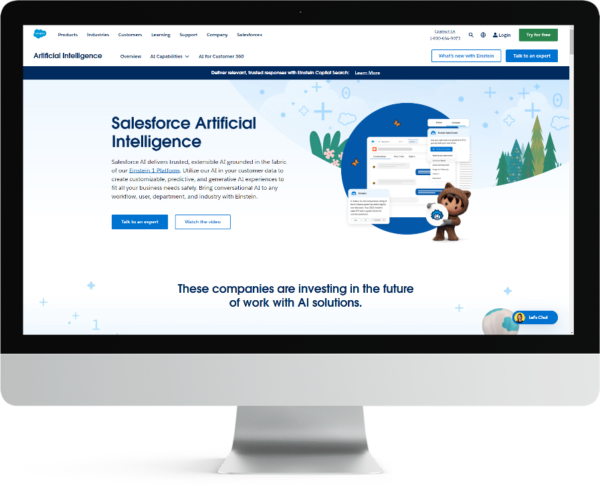
For example, Salesforce has created Einstein, an AI that uses advanced algorithms to analyze customer data and offer relevant solutions.

Task Automation: Automates complex tasks, such as customer segmentation and campaign personalization, improving efficiency and reducing response time.

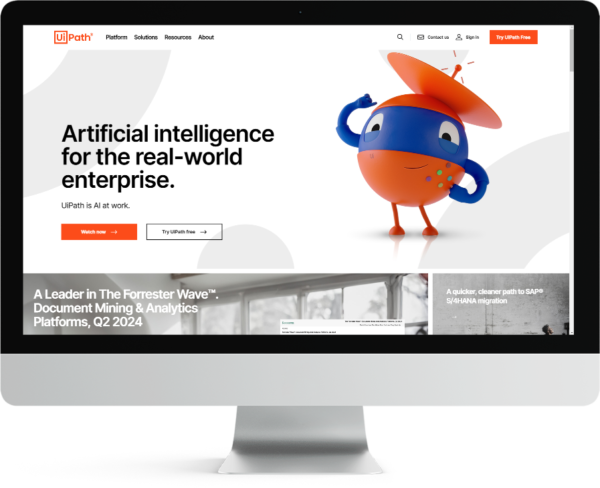
An ideal AI for improving operational efficiency is UiPath. This tool provides solutions that optimize repetitive administrative tasks, such as data entry and inventory management.

02-Automatizacion-de-tareas-600x488

Behavior Prediction: Using advanced algorithms, AI can predict future customer behavior and needs. This helps companies anticipate and offer more relevant solutions.

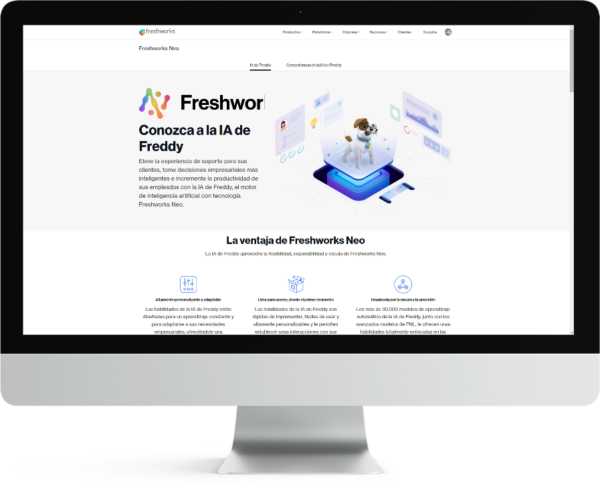
For this, there are CRM platforms that already integrate their own AI to maximize their tool’s potential. An example is Freddy AI, the AI tool from Freshworks, designed to accompany the customer journey at each stage and provide business and user-adapted recommendations.

03-Prediccion-de-comportamiento-600x488

Improving Customer Experience: AI-powered chatbots and virtual assistants can offer faster and more efficient customer service, enhancing the overall user experience.

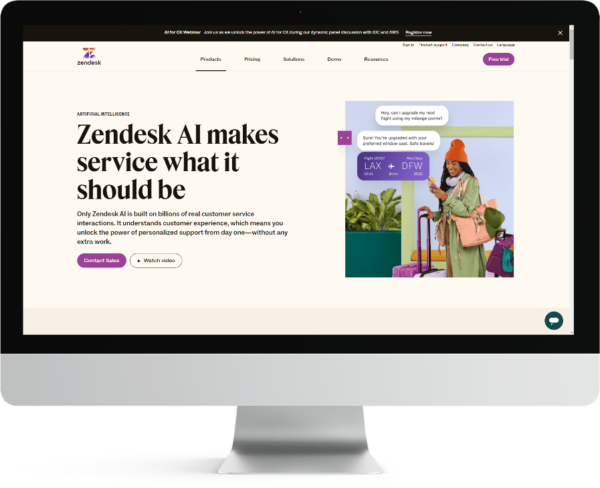
For this, you can use Zendesk, a platform that uses AI to improve customer service, offering automatic and efficient responses to common queries and directing requests to the sales team in real-time.

04-Mejora-de-la-experiencia-del-cliente-600x488
Blog-June-2024_Titular-04-EN-1

Now that you know the benefits AI offers, it’s time to integrate it into your CRM. Follow these simple steps to effectively adapt your company:

1. Evaluate Needs

Identify the specific challenges you want to address with AI, such as improving lead generation, customer service, or sales projections.

2. Choose the Right AI Tools

Select the AI tool that suits your needs or a CRM platform that is already AI-powered. You can now evaluate various AI solutions to customize your CRM and adapt it to what benefits you the most.

3. Organize Your Information

The accuracy of the results provided by AI depends on how you deliver your information and the quality of your databases. Without an adequate structure, AI cannot guarantee good execution

4. Adapt Your Platform to AI

Work with your IT team or your CRM provider to seamlessly integrate AI tools into your company’s system. You can also opt to acquire CRM software with built-in AI.

5. Prepare Your Team

Train your organization on using these AI tools so they can adapt them to their reports and, in turn, be the ones providing data to the AI.

6. Continuous Monitoring and Optimization

AI models are constantly improving. Monitor changes, updates, and new versions of AI and CRM platforms that optimize the results you seek.

Blog-June-2024_Titular-5-EN-1-600x235

We already know the great improvement opportunities that AI platforms offer for CRM and the ways to incorporate it for better customer personalization. However, we must not forget that it is an emerging technology and can make some errors that we must take into account:

Biased Data: The algorithm can produce inaccurate results if the data is biased or incomplete.

Lower Human Affinity: Responses can fail in interaction with customers and negatively impact their experiences.

Cybersecurity Risks: With AI tools, there is a risk of data breaches or cyberattacks, so it is important to handle it with caution.

Blog-June-2024_Titular-6-EN-600x237

CRM is essential for marketing success, as it allows companies to better understand their customers and offer a more personalized experience. When the power of CRM is combined with the capabilities of AI, companies can further optimize their marketing strategies and evolve their results to be more efficient, proactive, and with greater customer satisfaction and loyalty.

At Isource Marketing, we firmly believe that businesses should take the latest trends to make their marketing actions more effective and boost their processes. Please, feel free to contact us for advice or quotes on marketing solutions, and take the bold step to enhance your B2B/B2C strategies with us.
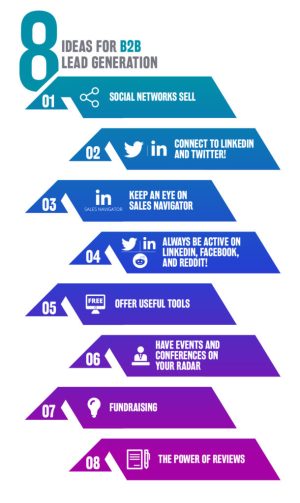
8 Ideas for B2B Lead Generation

8 Ideas for B2B Lead Generation

Share

No hay newsletters disponibles.

2020 was a year to redirect sales strategies. With the arrival of COVID-19 and social isolation, the ability to develop opportunities were restricted and the face-to-face relationship with potential clients became more complex. As a major obstacle, this change represented a new model when prospecting, which will not disappear in the near future.

Therefore, in order to help plan a sales strategy, we will be sharing 8 ideas for the successful generation of leads in the B2B sector in 2021.

1. Social Networks Sell
Social selling, with increasing force

Social selling is a way of obtaining prospects with the help of social networks –especially LinkedIn and Twitter– aiming to generate credibility and establish relationships with objective clients and , consequently, achieve commercial objectives. In the so-called “new normal”, social selling is a tool that allows us to take the next evolutionary leap within the digital transformation and adapt to the new sales funnel – depending on customer demand.

2. Connect to LinkedIn and Twitter!
At all times, and at every moment

In addition to the previous point, every day hundreds and thousands of professionals from various industries discuss and communicate on LinkedIn and Twitter. Although both social networks are different and offer different resources, do not lose sight of interactions that take place there; there will always be prospects willing to communicate with you.


3. Keep an eye on Sales Navigator
A premium tool with clear advantages

Do you want to improve your skills to prospect in the B2B sector? Sales Navigator is a premium LinkedIn resource, but is very effective because it simplifies the process of finding, contacting, and staying up-to-date with leads, referrals, and customers. It is a platform that allows you to save hours of manual tracking of potential clients and exchange information with. This will allow you to spend more time closing sales, making calls, or offer products and/or service demonstrations.

graficaEN-610x1024

4. Always be active on LinkedIn, Facebook, and Reddit!
Effective platforms to find potential clients

On them, individuals often ask questions in regards to solving certain problems. They can provide unique opportunities to help find real solutions. In terms of reach, it may not be the main source of attracting prospects, but it does provide a very good opportunity of getting closer to them.

5. Offer useful tools
Free and convenient

They are resources that help strengthen brand recognition and build trust between both parties. For example, if your company develops a collaborative software, providing a free 30-day trial that offers basic functionalities will help potential customers understand and get to know the tool, and decide to purchase the license after the trial period.

6. Have events and conferences on your radar
To connect with potential customers

This way, you will be able to approach your prospects with related topics to the ones seen at these events, in addition to expanding the network of potential clients while attending the event. In many cases, this will require the purchase of tickets. Make sure you analyze whether or not these events are profitable based on the objectives being discussed!

7. Fundraising
An excellent indicator for prospecting

A company that has raised funds is a very good indicator for potential clients to think about. It displays that the organization is booming and may be a smart investment and they are ideal to talk to for two reasons: because they have enough money available to spend or because they need new tools in order to grow.

8. The power of reviews
Focus on competitor’s products

Websites like G2 Marketing SolutionsCapterra and FeaturedCustomers are excellent tools for getting to know your competitors. Not only can you use reviews to understand problems some people are having, but also identify potential prospects who display any dissatisfaction through a review.

We hope this review of lead generation tactics has been helpful. At Isource Marketing we specialize in developing personalized B2B lead generation strategies according to the needs of your business and target market. You can contact us by clicking here, so that together we can take the next step in developing your own desired generation strategy. We can help!

Business Development Manager
Passion: Movies

Intelligent Creativity: How AI Influences UX/UI Design

Intelligent Creativity: How AI Influences UX/UI Design

Share

No hay newsletters disponibles.

In recent years, Artificial Intelligence (AI) has revolutionized numerous processes, optimizing tasks and improving tools across various industries. Design is no exception. Both User Experience (UX) and User Interface (UI) have been transformed by the advanced capabilities AI offers. In this blog, we will explore how AI is influencing UX and UI design and how we can leverage its benefits to create successful user experiences.

The Importance of UX/UI Design

UX and UI design are two crucial fields in digital design that work together to create successful and enjoyable products for users. While UX design focuses on the overall user experience, aiming to improve accessibility, satisfaction, and usability, UI design emphasizes the appearance and presentation of the product, ensuring it is visually appealing and coherent.

The importance of working on both lies in how they connect users with the product. Good UX design ensures that users can interact efficiently, facilitating navigation. Meanwhile, good UI design enhances the product’s aesthetics and user interaction, making the experience more enjoyable.

In the business world, a constant priority is to ensure customer satisfaction. In design, this responsibility is equally fundamental, especially in e-commerce and digital platforms that are frequently used. This turns the audience into vast amounts of data and expectations that designers must meet.

This is where Artificial Intelligence profoundly transforms both fields of digital design. By analyzing large volumes of data and learning from user behavior patterns, AI offers powerful tools that enable designers to create more personalized, efficient, and attractive experiences and interfaces. Next, we will explore the main benefits of AI in UX and UI design.

Benefits of AI in UX/UI Design

Personalization: Unique Experiences and Interfaces for Each User

AI can analyze large amounts of data to uniquely tailor the experience and interface. Algorithms enable applications and websites to automatically adapt to individual user preferences.

Platforms like Spotify adjust the user interface to highlight daily recommendations and personalized playlists based on the user’s listening history.

Design Automation: Efficiency and Creativity in UX and UI

AI-powered design tools allow designers to create more engaging and user-friendly content. Automation helps generate user flows and information architectures based on best practices and data, saving designers significant time.

Tools like Adobe XD with AI offer recommendations in wireframes and prototypes, while Figma uses AI to suggest design components and alignments, facilitating faster and more precise iterations.

Predictive Analysis: Anticipating Needs and Improving Decision-Making

AI’s ability to predict user behavior is invaluable for designers. AI can efficiently process large amounts of user data, providing valuable insights into user behavior and preferences.

For example, e-commerce platforms like Amazon can predict which products a user is more likely to buy, adjusting navigation and offers accordingly.

Continuous Evaluation: Instant Feedback

Usability testing and visual effectiveness evaluation enhance the success of a design. AI can track performance and adjust the design, ensuring that user experiences are always optimized.

An AI-powered visual study, such as the virtual eye-tracking provided by Tobii Pro, analyzes how users interact with the interface. This helps identify problem areas and optimize visual design.

Conversational Interaction: Virtual Assistants and Chatbots

Chatbots and virtual assistants are a clear example of how AI improves user interaction, facilitates communication, and provides real-time information.

Siri and Alexa are examples of AI that, by providing quick and relevant responses, enhance the user experience and interaction with their environment.

Accessibility: Inclusive Design

AI tools can suggest improvements to make websites and applications more accessible, helping to create more inclusive products.

For example, Microsoft’s AI for Accessibility generates alternative descriptions for images and adjusts color contrast for users with visual impairments, enhancing interaction for all disabilities.

User Profiles: Emotion Analysis

AI can help create detailed user profiles to personalize the experience, analyzing emotions and needs to create interfaces that better resonate with users.

Adobe Sensei uses AI to analyze and optimize visual design, recommending the use of certain colors or font styles that evoke the desired emotions to deeply connect with users, increasing both satisfaction and engagement.

5 AI Tools for UX/UI Design

Now that you know the benefits AI offers, it’s time to integrate it into your CRM. Follow these simple steps to effectively adapt your company:

Uizard: Converts sketches and wireframes into interactive prototypes using AI. This tool is ideal for quickly creating prototypes and gathering user feedback.

Galileo AI: Automates design elements and visual content. Quickly creates prototypes, interfaces, and graphics, and can generate HTML and CSS code to implement the prototypes, facilitating the development process.

Synthetic Users: Builds synthetic users that simulate real user behavior in various situations. This makes it easier to test products and platforms in different scenarios.

Fronty: Automatically transforms design images into HTML and CSS code, enabling agile website creation and editing without coding. Quickly converts visual mockups into functional websites.

Adobe Firefly: Edits and creates images and graphics with greater detail than other AIs. Its advanced algorithms suggest elements that align with the project’s needs.

AI positively influences UX and UI design, from personalization and automation to predictive analysis and design optimization. It offers powerful tools that facilitate the creation of more intuitive, attractive, and user-centered experiences and interfaces. Additionally, it helps designers focus more on creativity and less on repetitive tasks.

At Isource Marketing, we firmly believe that businesses should take the latest trends to make their marketing actions more effective and boost their processes. Please, feel free to contact us for advice or quotes on marketing solutions, and take the bold step to enhance your B2B/B2C strategies with us.
Telemarketer Executive

Telemarketer Executive

Se busca profesional con experiencia mínima de 1 año en ventas o atención al cliente para realizar prospección por teléfono y otros canales. Es indispensable un nivel avanzado de portugués, además de habilidades de comunicación, manejo de Excel y Google Sheets, y nivel intermedio de español o inglés. El puesto es remoto, por lo que se necesita equipo confiable y un espacio de trabajo adecuado. Se valorará experiencia adicional en ventas y un enfoque orientado a resultados.


Remoto

Tiempo Completo

Paso a paso para aplicar:

Envía tu hoja de vida al correo jobs-latam@isourcemarketing.com.

En el asunto del correo, escribe: ISM-TELEBRZ-025_Ejecutivo Telemercadeo_Brasil

Is your marketing ROI stagnant? AI is the solution You’ve been looking for

Is your marketing ROI stagnant? AI is the solution You’ve been looking for

Share

No hay newsletters disponibles.

If your marketing team is investing in digital strategies but your return on investment (ROI) isn’t growing at the expected pace, you’re not alone. Many tech companies face this challenge—even with paid campaigns, automation, and optimized content in place.

The reason is simple: traditional marketing is no longer enough. Personalization, real-time responsiveness, and the ability to process large volumes of data are now essential to drive profitability.

This is where artificial intelligence (AI) comes into play. In this blog, we’ll explore how AI is boosting marketing ROI, the key trends shaping the future, and the steps you can take to implement it effectively in your strategy.

Artificial Intelligence in Marketing: The Key to Higher ROI

Artificial intelligence in digital marketing is transforming how tech companies design, execute, and optimize their strategies. With its ability to automate workflows, analyze data in real time, and personalize every customer touchpoint, AI has become a critical ally for driving acquisition, conversion, and long-term loyalty.

By 2025, AI’s impact is no longer a futuristic projection—it’s a measurable and proven reality. This is backed by HubSpot’s recent report Is AI Really Driving ROI for Marketing Teams in 2025?, based on a survey of 700 marketing professionals across Latin America and Spain.

The numbers speak for themselves:

Say AI has improved their marketing ROI.

0 %

Report a direct increase in revenue due to AI implementation.

0 %

Have reduced operational costs through more efficient processes.

0 %

Have improved both content quality and team productivity.

0 %

For tech companies and startups, this represents a unique opportunity to accelerate execution and make smarter, data-driven decisions in real time. AI is no longer optional—it’s the new standard for scaling marketing results with intelligence.

How Is AI Impacting Digital Marketing?

Tech companies are leveraging AI across three key areas to boost profitability and optimize their marketing strategies.

1. AI for Automation and Operational Efficiency

AI-driven marketing automation is one of the fastest-growing areas. In fact, 49.2% of marketers already use chatbots and virtual assistants to enhance user experience and accelerate lead conversion.


Many platforms have integrated AI into their CRM systems to streamline processes such as:


  • Automated audience segmentation for more precise targeting.

  • Email and workflow automation to improve conversion rates.

  • Virtual assistants that handle real-time inquiries and qualify prospects.


With tools like HubSpot Content Assistant and ChatSpot, marketing teams can generate SEO-optimized content, manage customer interactions, and launch campaigns—without manual intervention.

2. AI for Predictive Analysis and Campaign Optimization

In 2025, digital advertising is no longer about simply launching ads—it’s about analyzing real-time data to maximize ROI.

47.5% of marketers already use AI to predict customer behavior and adjust their campaigns across platforms like Google Ads, Meta, and LinkedIn.

With solutions like HubSpot Customer Journey Analytics, companies can:

  • Forecast buying trends and tailor their strategies accordingly.

  • Optimize ad spend in real time, maximizing every marketing dollar.

  • Eliminate underperforming audiences to cut campaign costs.

The result? Greater efficiency, higher-quality leads, and stronger conversions.

3. AI-Powered Content Personalization in Digital Marketing

AI-generated content is another major trend gaining traction. 41.3% of marketers are already using AI tools to create tailored content for different audience segments.

But it’s not just about producing more—it’s about creating highly personalized content based on user behavior. With AI, you can:


  • Generate SEO-optimized blog posts to drive organic traffic.

  • Automate personalized ad copy and email sequences.

  • Create AI-powered visual content, cutting down design and production costs.


Platforms like HubSpot AI Content Generator empower marketing teams to deliver high-impact content without sacrificing quality or strategy.

Challenges and Opportunities of AI in Marketing

While AI in marketing is having a positive impact on ROI, many companies still face implementation challenges.

According to HubSpot’s report:

  • 50% of marketers are not leveraging AI’s full potential due to lack of training.

  • 46.2% cite a shortage of technical knowledge as a barrier.

  • 38.3% experience internal resistance to change.


Despite these challenges, the outlook is promising:
80.3% of marketing professionals plan to increase their use of AI in 2025.

So, what’s on the horizon?

  • Real-time conversion optimization

  • Hyper-segmented personalization at scale

  • Advanced automation powered by AI agents


The strategic adoption of these technologies won’t just improve results—it will determine who leads and who gets left behind in the tech-driven market.

Integrating AI into your marketing strategy goes beyond task automation—it’s about delivering measurable, sustainable results. To achieve that, you must focus on tracking impact and optimizing in real time.

Define Your Key Metrics

Start by identifying clear indicators that help evaluate the ROI of your AI-driven initiatives:

  • Conversion rate

  • Customer acquisition cost (CAC)

  • Customer lifetime value (CLTV)

These metrics reveal how effective your personalized and automated campaigns truly are.

Optimize Continuously

AI enables real-time optimization throughout your campaigns:

  • Reallocate budgets toward high-performing channels.

  • Personalize messages based on user behavior and intent.

Enhance segmentation using up-to-date and predictive data.

How to Implement AI in Your Strategy to Drive ROI

Companies Already Seeing Results

Linkedin

Increased conversions with AI-personalized ad campaigns.

Deloitte

Achieved a 74% boost in customer satisfaction.

Amazon

Scaled sales through dynamic recommendations and pricing.

Implementing AI strategically doesn’t have to be complex—with the right tools and a data-driven approach, it’s entirely achievable.

Key Takeaways

AI is no longer just a trend—it’s a strategic tool, unlocking new opportunities to improve marketing ROI.
Teams that implement AI effectively are seeing higher conversion rates, lower operational costs, and highly personalized campaigns. If your ROI is stagnant, now you know how to reignite it through AI. This is the moment to evolve your strategy.

At Isource, as certified HubSpot partners, we help tech companies integrate AI into their marketing with tools that enable faster, smarter, and data-driven decision-making.

Contact us today and discover how to build an AI-powered marketing strategy that maximizes your ROI.

HubSpot in Action: Scale your B2B Marketing with CRM, AI, and Automation

HubSpot in Action:
Scale your B2B Marketing with CRM, AI, and Automation

Share

No hay newsletters disponibles.

Is your marketing strategy still relying on assumptions, manual processes, and scattered data?

When opportunities are measured in clicks and seconds, lacking tools that provide full control, efficiency, and visibility doesn’t just slow you down—it costs you sales.

HubSpot has evolved. Today, it combines intelligent automation, a robust CRM, and artificial intelligence to help you attract high-quality leads, streamline your team’s workflows, and accelerate every stage of your sales funnel.

As an official HubSpot partner, we at Isource understand the value of leveraging this platform’s full potential to optimize marketing, sales, and customer service operations.

In this article, we’ll explore how HubSpot’s advanced, AI-powered features can transform how your business scales, converts, and grows—with precision.

Why HubSpot is the missing piece to unlock your Business Growth?

When a tech company is ready to grow, it needs more than isolated tools or fragmented systems. It needs a unified solution that connects lead generation, sales, and long-term customer engagement. That’s exactly what HubSpot offers—a comprehensive platform designed to drive growth in a structured, measurable, and scalable way.

HubSpot integrates marketing, sales, customer service, and CRM into a single solution. This not only streamlines team collaboration but also provides complete visibility across the customer lifecycle—from the first click to post-sale engagement—all in one place.

Now, with artificial intelligence (AI) powering its features, the platform has become even smarter—helping you move faster, close more deals, and optimize every customer touchpoint.

CRM in motion: accelerate results with smart Sales Execution

Manually managing leads is no longer sustainable for businesses ready to scale.

Real growth happens when your CRM stores data, prioritizes opportunities, automates tasks, and empowers your team to act at the right moment.

HubSpot CRM provides a clear view of every contact, automates repetitive tasks, and centralizes all relevant customer information. With Breeze, HubSpot’s native AI, the CRM becomes truly proactive.

Breeze analyzes real-time data, identifies conversion patterns, and delivers intelligent recommendations, so your sales team can focus where it matters most.

Key features enhanced by Breeze:

  • Automated lead scoring based on user behavior and engagement.
  • Deal closure predictions to allocate resources to the most promising opportunities.
  • Actionable insights, such as the best time to contact a lead or which content to share.

Every sales decision is backed by real data and predictive insights—no more chasing cold leads or relying on guesswork.

Smarter Inbound Marketing: Content that puts the game in your favor

Winning at inbound marketing today requires both relevance and execution efficiency. With HubSpot, you can design and automate your entire content strategy blogs, emails, landing pages, forms, CTAs, and more.

Everything is built to attract qualified leads, convert them, and nurture them with the right content at the right moment.

What sets HubSpot apart is how it executes this through automation—especially with Breeze Copilot, its AI-powered assistant that enables:

  • Drafting blog posts and email campaigns with personalized suggestions.

  • Optimizing content for real-time SEO based on search intent and competitive data.

  • Automatically segmenting audiences and delivering dynamic content tailored to interests and behaviors.
  •  

The result is an inbound strategy that not only scales but improves with every interaction. Your leads receive meaningful, timely content while your team focuses on what truly matters—turning ideas into measurable results.

Still unsure how to improve your content strategy and achieve effective inbound marketing? Check out our Comprehensive Guide: Advanced Inbound Marketing Strategies for the Technology Sector

Automate, Scale, and Grow: Tools that seamlessly connect your marketing and sales

The gap between businesses that scale and those that stall comes down to execution. Having strategies is not enough—you must implement them quickly, with precision, and at scale.

HubSpot recognizes this challenge and goes far beyond CRM and inbound marketing.

With HubSpot, you can:

to nurture leads, assign tasks to your sales team, and trigger alerts based on user behavior.


to answer inquiries, qualify leads, and automatically schedule meetings.


tailored to each prospect’s past interactions.

All of this becomes even more powerful with Breeze Agents, HubSpot’s intelligent assistants that help:

  • Automate prospecting processes.

  • Schedule administrative tasks.

  • Personalize outreach based on lead intent.


Think of HubSpot’s AI as an extension of your team—managing repetitive tasks, analyzing real-time data, and providing recommendations to boost efficiency and drive results faster.

Conclusion: HubSpot takes your marketing to the next level

Today, scaling success depends on how smart, integrated, and agile your processes are. HubSpot is more than a CRM or a marketing tool—it’s the upgrade your strategy needs to grow in a structured, measurable, and sustainable way.

Whether you’re a fast-growing startup or an established tech business, HubSpot is the solution that supports your growth objectives.

Achieving real impact with HubSpot requires more than just access—it takes strategy, structure, and expert guidance.

At Isource, as official HubSpot partners, we transform the platform into a true growth engine for your business.

From CRM setup to full marketing and sales automation, we’ll support you every step of the way—helping you unlock HubSpot’s full potential and drive meaningful results.